Nutritionist's Tips
Nutritionist's Tips: 6 Teas for Gastrointestinal Discomfort
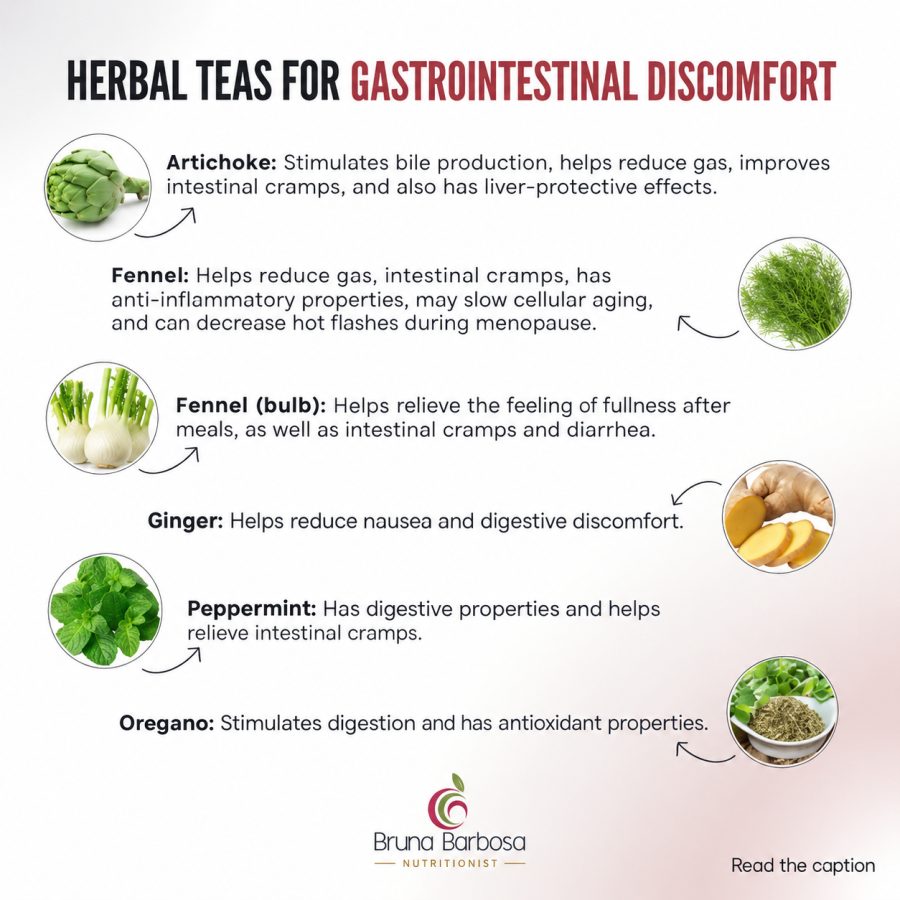
If you're experiencing gastrointestinal discomfort, the answer might be in your cup of tea! So, follow my tips right away! Learn more.
Gastrointestinal Discomforts? Discover the Teas that Can Help!
If you're experiencing gastrointestinal discomforts, the answer might be in your cup of tea! Patients are always looking for more natural options, and here teas are a hit. Teas have been used for a long time as natural remedies for a variety of health issues, including gastrointestinal problems.
Let's explore some tea options that can help alleviate these discomforts and promote intestinal health. But below I leave the contraindications so as not to make a mistake. 😉
1. Artichoke Tea: Improved Digestion and Liver Stimulation
Artichoke is an excellent option for promoting digestive health. Its tea can help with digestion by stimulating bile production in the liver, which aids in breaking down food fats. Additionally, artichoke has diuretic properties, which can help eliminate toxins and reduce abdominal bloating. Contraindicated for people with bile duct obstruction, pregnancy, and lactation.
2. Licorice Tea: Reduced Gas and Bloating
Licorice is often used as a natural remedy for digestive issues, including gas and bloating. Licorice tea has carminative properties that can help reduce gas formation and promote the expulsion of gas from the gastrointestinal tract. Additionally, licorice can also help alleviate the sensation of bloating and abdominal discomfort. Drink a cup of licorice tea after meals to help with digestion and alleviate any gastrointestinal discomfort.
3. Fennel Tea: Carminative and Digestive Action
Fennel, also known as licorice, has carminative properties that help reduce gas and alleviate abdominal colics. Its tea can be especially useful after heavy meals, aiding digestion and preventing gastrointestinal discomforts. Contraindicated for pregnant women, nursing mothers, alcoholics, and diabetics.
4. Ginger Tea: Relief for Nauseas and Indigestion
Ginger is widely known for its antiemetic properties, meaning it can help alleviate nausea and vomiting. Additionally, ginger also has anti-inflammatory and antioxidant properties that can help alleviate indigestion and reduce inflammation in the digestive tract. If you're feeling nauseous or have indigestion, try drinking a cup of ginger tea for relief. Contraindicated for children and individuals with gallstones and stomach irritation.
5. Mint Tea: Relief for Colics and Gas
Mint is known for its carminative properties, meaning it can help alleviate colics and gas in the gastrointestinal tract. Additionally, the refreshing aroma of mint can help calm the stomach and reduce the sensation of nausea. Drinking mint tea after meals can help promote healthy digestion and alleviate any stomach discomfort you may be feeling. Contraindicated for patients with reflux, hiatal hernia, kidney stones, bile duct obstruction, severe liver damage, and during pregnancy.
6. Oregano Tea: Antimicrobial and Digestive Properties
Oregano is not only a delicious spice but can also be used to prepare a tea with antimicrobial and digestive properties. Oregano tea can help combat intestinal infections and promote digestive health, making it an excellent option for gastrointestinal discomforts. Contraindicated for pregnant women and nursing mothers.
Tips for Preparing and Consuming Teas:
Use freshly boiled, but not boiling, water to prepare the teas. Boiling water can cause the teas to lose some of their active compounds.
Let the herbs steep for at least 5 to 10 minutes to get the maximum benefits.
Drink the teas between meals to avoid diluting digestive juices.
Avoid adding sugar to the teas, as this can neutralize some of the health benefits.
Remember that while teas can be useful for relieving gastrointestinal discomforts, it's important to seek medical and nutritional advice if symptoms persist or worsen. Additionally, ensure that the teas are suitable for you, especially if you're pregnant, breastfeeding, or have specific health conditions. With these simple tips, you can use the natural power of teas to promote better intestinal health and alleviate gastrointestinal discomforts.
Related Reading

About the Author
Bruna Barbosa — Nutritionist, CRN-DF 16963
Specializing in Functional Nutrition, Phytotherapy, and Digestive Health, Bruna helps people understand their symptoms and transform their health starting from the gut, based on scientific evidence, empathy, and clinical practice. She produces accessible, well-founded content to guide more conscious and sustainable choices.
Learn more about Bruna →