Gut Health Focus
Fear of eating due to your inflammatory bowel disease?
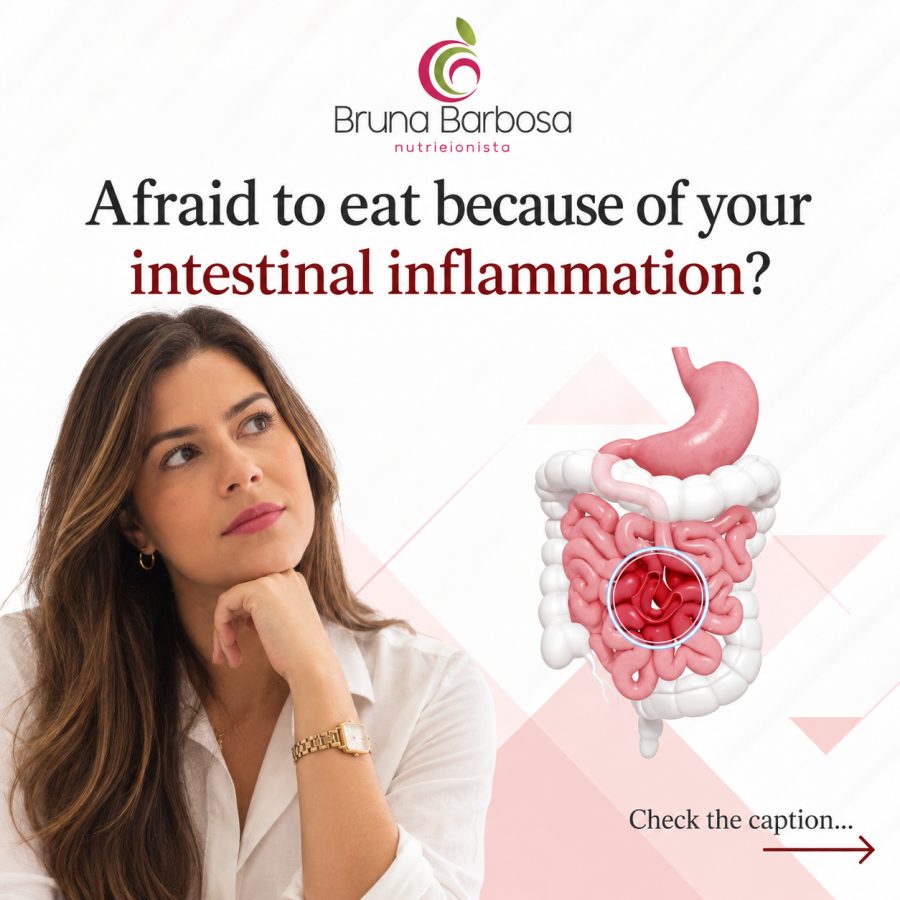
Dealing with the fear of eating can be challenging for those with inflammatory diseases. Don't let it control your life. Learn More!
Inflammatory Bowel Disease and Fear of Eating: How to Manage and Recover Enjoyment in Food
It is very common to receive in the clinic patients who report having a fear of eating, due to abdominal pain and other discomforts resulting from the disease, especially during the acute phase.
Dealing with the fear of eating is a reality for many patients who suffer from inflammatory bowel diseases.
The concern about abdominal pain, discomfort, and possible complications during an acute crisis can lead to aversion to food and dietary restriction, resulting in a limited and unbalanced diet.
Inflammatory Bowel Disease and Fear of Eating: How to Manage and Recover Enjoyment in Food
It is very common to receive in the clinic patients who report having a fear of eating, due to abdominal pain and other discomforts resulting from the disease, especially during the acute phase. The way of eating can become a source of stress for those who suffer from Inflammatory Bowel Disease (IBD), leading to aversion to food and enjoyment in eating.
How Eating Habits Affect Patients with IBD?
The fear of eating often results in an extremely restrictive, unbalanced, and nutrient-poor diet. This not only compromises physical health but also affects emotional and mental health. Working on eating habits is essential to develop a positive relationship with food, helping the patient overcome the fear and regain confidence in food choices.
Moreover, the way the patient eats — from the types of foods chosen to the environment in which they eat — can directly influence digestion and intestinal health. Eating in a calm environment, chewing slowly, and avoiding distractions, such as television or cell phone, can help reduce discomfort after meals.
The Villains of the Diet: Foods that Can Trigger Symptoms
Among the foods that can aggravate the symptoms of IBD are ultra-processed foods, rich in chemical additives that irritate the sensitive digestive tract. Gluten, present in wheat, rye, and barley, is also frequently associated with gastrointestinal discomfort.
Another important factor in eating habits is paying attention to the quantities consumed. Large portions of high-fat foods, such as cream and butter, can cause abdominal discomfort and increase symptoms during a crisis.
Avoiding Food Traps: Strategies for Safe Eating
To deal with the challenges of IBD, it is essential to adopt practical strategies that make eating more conscious and safe:
Avoid artificial sweeteners: Substances like sorbitol and mannitol, found in “zero sugar” foods, can cause gas and diarrhea.
Moderate consumption of dairy: Lactose intolerance is common in patients with IBD.
Adopt a Low FODMAPs diet: Temporarily restricts fermentable foods that can aggravate symptoms.
Prefer smaller portions: Eating smaller portions throughout the day can help avoid overloading the digestive system.
The Importance of Fibers in Eating Habits
Although fibers are essential for intestinal health, patients with IBD should be careful when consuming insoluble fibers, such as those present in fruits with skin and whole grains, during crises. Soluble fibers, found in oats and some fruits, may be better tolerated and contribute to a balanced intestinal transit.
Following a nutritionist can help adjust the amount and type of fibers according to the stage of the disease and the patient's needs.
Practical Tips for Developing a Healthy Eating Habit
Keeping a food diary is an effective tool for patients with IBD. Recording the foods consumed and the observed symptoms helps identify patterns and triggers. This allows the patient to develop greater autonomy in food choices and adjust their eating habits consciously.
Other tips include:
Eat slowly: Chewing well facilitates digestion and reduces discomfort.
Create a quiet environment: Avoid distractions during meals to improve the connection with food.
Stay hydrated: Drink water regularly to maintain proper intestinal function.
Seeking Professional Support to Improve Eating Habits
A nutritionist specialized in IBD is essential to help the patient develop personalized strategies. In addition to guiding on safe foods, the professional assists in dietary re-education, promoting a healthy and sustainable eating habit.
Emotional support is also fundamental. Participating in support groups or seeking therapy can help the patient deal with the fear of eating and recover enjoyment in meals.
Conclusion
Working on eating habits is an essential step for patients with IBD. By identifying food triggers, planning meals carefully, and seeking professional support, it is possible to overcome the fear of eating and develop a more positive relationship with food.
Each achievement along this process deserves to be celebrated. Small adjustments in eating habits can lead to significant advances in intestinal health and overall well-being.
It is very common to receive in the clinic patients who report having a fear of eating, due to abdominal pain and other discomforts resulting from the disease, especially during the acute phase.
Dealing with the fear of eating is a reality for many patients who suffer from inflammatory bowel diseases.
The concern about abdominal pain, discomfort, and possible complications during an acute crisis can lead to aversion to food and dietary restriction, resulting in a limited and unbalanced diet.
Inflammatory Bowel Disease and Fear of Eating: How to Manage and Recover Enjoyment in Food
It is very common to receive in the clinic patients who report having a fear of eating, due to abdominal pain and other discomforts resulting from the disease, especially during the acute phase. The way of eating can become a source of stress for those who suffer from Inflammatory Bowel Disease (IBD), leading to aversion to food and enjoyment in eating.
How Eating Habits Affect Patients with IBD?
The fear of eating often results in an extremely restrictive, unbalanced, and nutrient-poor diet. This not only compromises physical health but also affects emotional and mental health. Working on eating habits is essential to develop a positive relationship with food, helping the patient overcome the fear and regain confidence in food choices.
Moreover, the way the patient eats — from the types of foods chosen to the environment in which they eat — can directly influence digestion and intestinal health. Eating in a calm environment, chewing slowly, and avoiding distractions, such as television or cell phone, can help reduce discomfort after meals.
The Villains of the Diet: Foods that Can Trigger Symptoms
Among the foods that can aggravate the symptoms of IBD are ultra-processed foods, rich in chemical additives that irritate the sensitive digestive tract. Gluten, present in wheat, rye, and barley, is also frequently associated with gastrointestinal discomfort.
Another important factor in eating habits is paying attention to the quantities consumed. Large portions of high-fat foods, such as cream and butter, can cause abdominal discomfort and increase symptoms during a crisis.
Avoiding Food Traps: Strategies for Safe Eating
To deal with the challenges of IBD, it is essential to adopt practical strategies that make eating more conscious and safe:
Avoid artificial sweeteners: Substances like sorbitol and mannitol, found in “zero sugar” foods, can cause gas and diarrhea.
Moderate consumption of dairy: Lactose intolerance is common in patients with IBD.
Adopt a Low FODMAPs diet: Temporarily restricts fermentable foods that can aggravate symptoms.
Prefer smaller portions: Eating smaller portions throughout the day can help avoid overloading the digestive system.
The Importance of Fibers in Eating Habits
Although fibers are essential for intestinal health, patients with IBD should be careful when consuming insoluble fibers, such as those present in fruits with skin and whole grains, during crises. Soluble fibers, found in oats and some fruits, may be better tolerated and contribute to a balanced intestinal transit.
Following a nutritionist can help adjust the amount and type of fibers according to the stage of the disease and the patient's needs.
Practical Tips for Developing a Healthy Eating Habit
Keeping a food diary is an effective tool for patients with IBD. Recording the foods consumed and the observed symptoms helps identify patterns and triggers. This allows the patient to develop greater autonomy in food choices and adjust their eating habits consciously.
Other tips include:
Eat slowly: Chewing well facilitates digestion and reduces discomfort.
Create a quiet environment: Avoid distractions during meals to improve the connection with food.
Stay hydrated: Drink water regularly to maintain proper intestinal function.
Seeking Professional Support to Improve Eating Habits
A nutritionist specialized in IBD is essential to help the patient develop personalized strategies. In addition to guiding on safe foods, the professional assists in dietary re-education, promoting a healthy and sustainable eating habit.
Emotional support is also fundamental. Participating in support groups or seeking therapy can help the patient deal with the fear of eating and recover enjoyment in meals.
Conclusion
Working on eating habits is an essential step for patients with IBD. By identifying food triggers, planning meals carefully, and seeking professional support, it is possible to overcome the fear of eating and develop a more positive relationship with food.
Each achievement along this process deserves to be celebrated. Small adjustments in eating habits can lead to significant advances in intestinal health and overall well-being.

About the Author
Bruna Barbosa — Nutritionist, CRN-DF 16963
Specializing in Functional Nutrition, Phytotherapy, and Digestive Health, Bruna helps people understand their symptoms and transform their health starting from the gut, based on scientific evidence, empathy, and clinical practice. She produces accessible, well-founded content to guide more conscious and sustainable choices.
Learn more about Bruna →